Can You Drive With a Flat Tyre? A Safety Guide for Drivers

A flat tyre can turn a normal drive into a stressful moment within seconds. You might hear a strange flapping sound, feel the steering go heavy, or notice the car pulling to one side.
The short answer is no: you should not drive on a flat tyre. Doing so can damage the tyre, wheel rim, steering components, and suspension, and it makes the car harder to control, especially when braking or cornering. Some vehicles have run-flat tyres that allow limited driving after a puncture, but you should never drive on a standard tyre while flat.
Knowing what to do the moment a tyre goes flat can stop a small puncture from becoming an expensive repair.
Why You Shouldn't Drive on a Flat Tyre
A tyre needs the correct air pressure to support the vehicle's weight and maintain proper contact with the road. Once it loses most or all of its air, the sidewall gets crushed under the car's weight. Continuing to drive builds up heat and friction inside the tyre, causing internal damage that often isn't visible from the outside.
Driving on a flat tyre can affect:
Steering control
Braking performance
Vehicle stability
The tyre's sidewall
The wheel rim
Suspension components
You may need to move the car a short distance to get out of a dangerous spot, but driving several kilometres on a flat tyre is an unnecessary risk.
What Actually Happens When You Drive on a Flat Tyre
Steering becomes harder to control. A flat tyre can't hold its normal shape, so steering feels heavy or uneven, and the car may pull toward the damaged side.
Stopping takes longer. A tyre with little or no air can't grip the road the way it's designed to, which matters even more on wet roads.
The sidewall takes the damage. With no air cushion, the sidewall carries most of the load. Continuing to drive can cause cracks, cuts, or damage deep inside the tyre structure.
The wheel rim can get damaged. Once the air cushion is gone, the rim can hit potholes and rough road surfaces directly. A bent or cracked rim usually costs far more to fix than a simple puncture.
Heat builds up fast. A flat tyre flexes heavily while the car moves, and that flexing generates heat that can lead to complete tyre failure.
How Far Can You Actually Drive on a Flat Tyre?

There's an exception for immediate safety. If you're stuck in the middle of a busy road, you can move the car just far enough to reach a safer spot, such as the road shoulder. That's different from continuing your journey. Don't use a flat tyre as an excuse to drive slowly to a workshop instead of calling for help. Switching to the spare tyre or calling roadside assistance is almost always the safer option. Drivers who want to understand the difference between standard and reinforced tyres can also learn more about run-flat tyres and how they compare with normal tyres.
What About a Slightly Flat Tyre?
A tyre that looks a bit low isn't the same as a completely flat one, but it still deserves attention. Low pressure increases rolling resistance and puts extra flex on the sidewall, which can lead to:
Uneven tyre wear
Higher fuel consumption
Poor handling
Increased heat
A shorter tyre lifespan
Check the pressure with a reliable gauge and compare it against the manufacturer's recommended figure, usually found on the driver's door frame, fuel flap, or in the vehicle handbook. Don't judge pressure by eye. A tyre can look fine but still be significantly underinflated.
What to Do When You Get a Flat Tyre
Stay calm and slow down. A sudden puncture can make the car feel unstable. Keep both hands on the wheel and ease off the accelerator gradually. Avoid sudden braking or sharp steering.
Get to a safe spot. Move away from moving traffic and stop on stable, level ground. Turn on your hazard lights so other drivers can see you, and avoid standing near fast-moving traffic while you wait or work on the car.
Inspect the tyre. Once you're safely parked, check the tyre from a safe position for a nail, screw, cut, or other visible damage. Never put your hands underneath the vehicle.
Fit the spare, if you have one. Make sure it's properly inflated and installed securely. Temporary spares usually come with speed and distance limits, so check your vehicle's manual before driving on one.
Call for help if needed. If you don't have a spare, the right tools, or a safe place to change the tyre, roadside assistance is the better call, especially on busy roads or in bad weather.
Can a Flat Tyre Be Repaired?
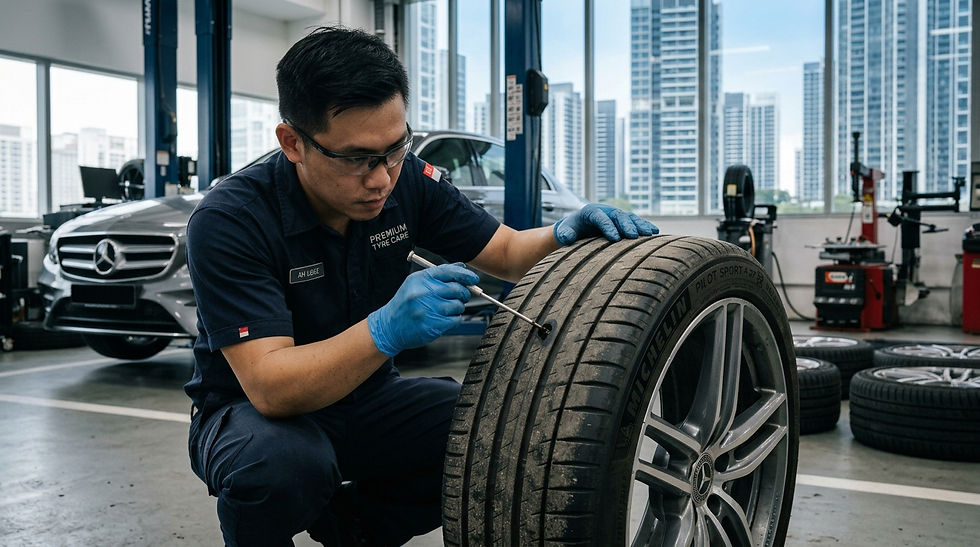
It depends on the damage. A repair is often possible when the puncture is small and located in the tread area. Sidewall damage is a different story and is usually much harder, or impossible, to repair safely.
If you drove on the tyre while it was completely flat, it may have internal damage that isn't visible from the outside. A qualified tyre technician should inspect it before deciding whether it can be repaired or needs to be replaced.
Flat Tyre vs Run-Flat Tyre
Standard and run-flat tyres don't behave the same way once they lose air. Run-flat tyres have reinforced sidewalls that let you keep driving a limited distance after a puncture, giving you time to reach a safer spot or a tyre centre instead of stopping on the roadside.
That said, run-flat tyres still have speed and distance limits that vary by tyre and vehicle, so you shouldn't drive them normally after a puncture. A standard tyre offers none of this flexibility. Once it goes flat, continuing to drive risks serious damage.
For a more detailed explanation of the distance and limitations involved, read this guide on how far you can drive on a run-flat tyre.
Why Tyre Pressure Matters

Correct tyre pressure is one of the simplest things you can check on your car, yet it's often ignored. Proper inflation keeps the tyre's shape and road contact as intended, supporting handling, braking, fuel efficiency, and tread wear.
Singapore's hot and humid weather, combined with heavy traffic, frequent stop-start driving, and rough patches like kerbs and potholes, puts extra strain on tyres. Checking pressure regularly is a lot easier than dealing with a sudden failure on the road.
Warning Signs a Tyre Might Be in Trouble
A flat tyre doesn't always happen without warning. Watch out for:
A tyre pressure warning light
Steering that feels heavier than usual
The car pulling to one side
Unusual vibration
A repeated thumping sound
Visible cuts or damage
A tyre that looks lower than the others
Uneven tread wear
Catching these signs early can help you avoid a breakdown on the road.
How to Avoid Flat Tyres
You can't prevent every puncture, but regular care significantly lowers the odds. Check your tyre pressure often, inspect the tread and sidewalls for damage, and monitor tread depth so you can replace tyres before they wear out.
Try to avoid hitting kerbs and potholes at speed, and make sure your spare tyre, jack, and tools work and are easy to access. This matters even more before long trips, highway drives, or holiday travel. Knowing the correct tyre size and type also makes replacement easier. A useful guide on choosing the right tyres for your car can help drivers understand key factors such as tyre size, vehicle type, driving conditions, and performance.
When Should You Replace a Tyre Instead of Repairing It?
Replace a tyre if it has severe sidewall damage, exposed cords, major cuts, or internal damage from being driven flat. Also replace worn tyres that no longer grip safely.
Don't pick a replacement based on price alone. The right size, load rating, and speed rating matter for keeping the handling and safety the car was designed for.
Final Thoughts
If you're wondering whether you can drive with a flat tyre, the answer for a standard tyre is no. Continuing to drive risks damaging both the tyre and the wheel while making the car harder to control.
Pull over somewhere safe, switch on your hazard lights, and arrange a tyre change or professional help. A short delay now is far better than turning a simple puncture into a costly repair later.
FAQs
Can I drive 1 km on a flat tyre?
It's best not to. Move the car only far enough to reach a safer spot, then arrange assistance or change the tyre.
What happens if you keep driving on a flat tyre?
It can damage the sidewall, build up excessive heat, reduce steering control, weaken braking, and damage the wheel rim.
Can I drive on a flat run-flat tyre?
Yes, for a limited distance and speed. Check the limits set by your tyre or vehicle manufacturer, and get the tyre inspected as soon as possible.
Can a flat tyre always be repaired?
No. Small tread punctures are often repairable, but sidewall damage, major cuts, or damage from driving on a flat tyre usually means replacement.
How can I prevent a flat tyre?
Check your tyre pressure regularly, inspect the tread and sidewalls, avoid potholes and kerbs where possible, watch your tread depth, and replace damaged or worn tyres promptly.


Comments