How to Choose the Right Rims for Your Car?

Updated: Aug 14
Rims do much more than improve the appearance of a car. They play an important role in handling, braking, ride comfort, fuel efficiency, and overall driving safety. Choosing the wrong rims can lead to poor performance, faster tyre wear, and expensive repairs. Many drivers focus only on the design, but the right choice depends on several factors, including size, material, weight, and compatibility with the vehicle.
Whether you are replacing damaged rims or upgrading your car's appearance, understanding the basics helps you make a better decision. A well-chosen set of rims not only enhances the look of your vehicle but also supports better driving performance and long-term reliability.
This guide explains everything you need to know about choosing the right rims for your car, in simple, easy-to-understand language.
Why Choosing the Right Rims Matters

The rims are one of the most important parts of the wheel assembly. They support the tyres and help maintain proper contact with the road.
Choosing suitable rims offers several benefits:
Better handling and stability
Improved braking performance
Longer tyre life
Better fuel efficiency
Increased driving comfort
Enhanced vehicle appearance
Reduced wear on suspension components
Selecting rims that match your vehicle specifications keeps your car safe and performing as intended.
Understand Your Car's Recommended Rim Size
The first step is choosing the correct rim size.
Every vehicle manufacturer recommends a specific wheel diameter and width. These measurements are designed to provide the best balance between comfort, handling, and safety.
Common rim sizes include:
14-inch
15-inch
16-inch
17-inch
18-inch
19-inch
20-inch
Larger rims often improve appearance and cornering performance, while smaller rims usually provide a smoother ride. Always check your owner's manual or the sticker inside the driver's door for the recommended size.
Choose the Right Rim Width
Rim width affects how your tyres fit and perform on the road. The correct width improves handling, stability, braking, and tyre life. A rim that is too wide or too narrow can lead to uneven tyre wear and reduced driving comfort. Always choose a rim width that matches your vehicle and tyre specifications.
The correct width provides:
Better tyre support
Improved cornering stability
Even tyre wear
Better grip during braking
Increased driving comfort
Matching the rim width with the tyre size creates the best overall performance.
Check the Bolt Pattern
Every vehicle has a specific bolt pattern.
The bolt pattern refers to:
The number of wheel bolts
The distance between them
Examples include:
4x100
5x114.3
5x120
A mismatched bolt pattern prevents the rim from fitting correctly.
Always confirm the correct specification before purchasing new rims.
Pay Attention to Centre Bore Size

The centre bore is the hole in the rim that fits over the wheel hub.
A correct centre bore:
Reduces vibrations
Keeps the wheel centred
Improves driving stability
Hub-centric rims provide the most secure fit for everyday driving.
Think About Rim Weight
Many drivers overlook the importance of wheel weight.
Lighter rims offer several advantages:
Faster acceleration
Better braking
Improved fuel economy
Less stress on suspension
Better steering response
Heavy rims increase rotational mass, making the engine work harder.
Choose a Rim Design That Matches Your Driving Style
Rims come in a variety of designs, each offering a different look and driving experience. Choose a style that suits your vehicle, daily driving needs, and personal preferences while maintaining proper fit and performance.
Popular designs include:
Multi-Spoke Rims: These offer a modern appearance and good strength.
Split-Spoke Rims: A popular choice for sports cars and performance vehicles.
Mesh Rims: Known for their stylish and premium look.
Five-Spoke Rims: Simple, durable, and easy to clean.
Choose a design that complements your vehicle while remaining practical for daily use.
Consider Singapore's Road Conditions
Singapore roads are generally smooth, but drivers still encounter speed humps, multi-storey car parks, drainage covers, and occasional road repairs. Choosing durable rims with the correct size helps reduce the risk of damage during everyday driving.
Drivers who frequently travel around the city often benefit from rims that provide a balance between appearance, comfort, and durability.
Match the Rims with the Right Tyres
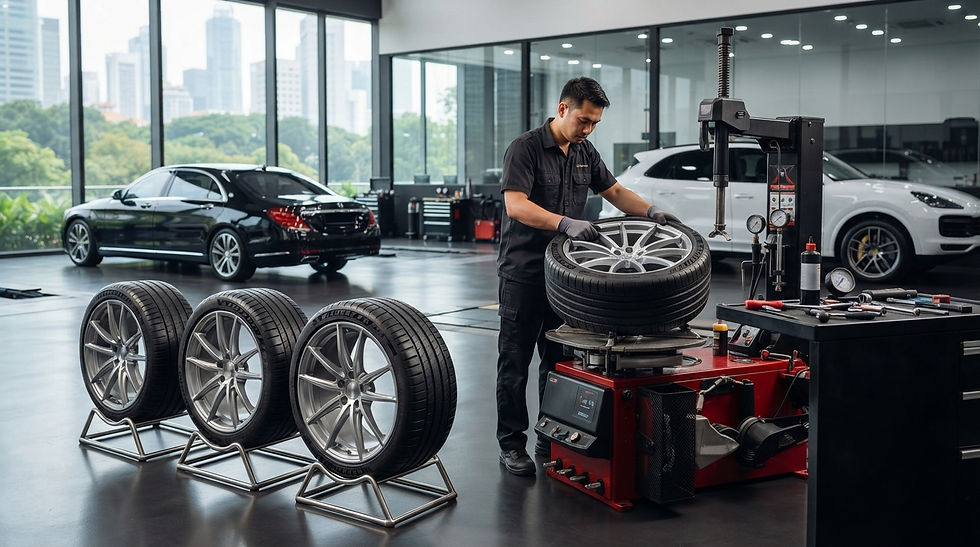
Rims and tyres should always work together.
A properly matched combination provides:
Better traction
Improved handling
Even tread wear
Better ride comfort
Increased safety
Professional tyre shops can recommend suitable tyre sizes for your chosen rims. Drivers can also learn more about run-flat tyres vs normal tyres to understand how different tyre types can affect driving comfort, safety, and everyday performance.
Common Mistakes When Buying New Rims
Avoiding common mistakes saves money and improves safety.
Some of the most common errors include:
Choosing rims based only on appearance
Buying the wrong diameter
Ignoring wheel offset
Forgetting the bolt pattern
Choosing incorrect rim width
Purchasing very heavy rims
Skipping professional installation
Not balancing the wheels after installation
Careful planning leads to better long-term results.
Maintenance Tips for Your Rims
Looking after your rims keeps them in excellent condition.
Follow these simple tips:
Wash the rims regularly.
Remove brake dust before it builds up.
Avoid hitting kerbs.
Check for cracks or bends.
Maintain correct tyre pressure.
Inspect the wheels during tyre rotations.
Balance the wheels whenever needed.
Regular maintenance improves both appearance and performance.
When Should You Replace Your Rims?
Rims do not last forever.
Replacement becomes necessary when you notice:
Cracks
Severe bends
Heavy corrosion
Air leaks around the tyre bead
Excessive vibration caused by wheel damage
Replacing damaged rims helps maintain safe driving and prevents further tyre problems.
Conclusion
Choosing the right rims involves much more than finding a design that looks attractive. The correct size, width, bolt pattern, offset, centre bore, and material all play an important role in your car's safety, comfort, and performance. Well-matched rims improve handling, protect your tyres, reduce suspension wear, and create a smoother driving experience. Taking time to understand these factors helps you invest in rims that not only enhance your vehicle's appearance but also deliver reliable performance for many years. A careful choice today can save money on maintenance and improve every journey on the road.
FAQs
1. What size rims should I choose for my car?
The best rim size is the one recommended by your vehicle manufacturer. This ensures proper fitment, safety, and driving performance.
2. Are alloy rims better than steel rims?
Alloy rims are lighter, improve handling, and offer more stylish designs. Steel rims are stronger against impacts and usually cost less.
3. Can larger rims improve handling?
Larger rims can provide better cornering stability, but they may also create a firmer ride. The correct balance depends on your vehicle and driving needs.
4. Why is wheel offset important?
Wheel offset affects steering, suspension clearance, and tyre positioning. Choosing the correct offset helps maintain safe and stable handling.
5. Should new rims be balanced after installation?
Yes. Wheel balancing helps eliminate vibrations and provides a smoother, more comfortable driving experience while extending tyre life.


Comments