Premium vs Budget Tyres in Singapore: Which Wins for EV and Hybrid Cars?

Choosing tyres for an electric or hybrid car is not quite the same as choosing tyres for an older petrol car. EVs can be heavier because of their battery packs, while electric motors deliver strong torque very quickly. Hybrid cars also switch between electric and petrol power, so tyre performance matters for both city driving and longer trips.
For Singapore drivers, the choice matters even more because roads can turn wet after sudden rain, traffic is often heavy, and cars spend a lot of time stopping and starting.
So, are premium tyres really worth the extra money, or can budget tyres give EV and hybrid owners enough performance for daily driving? The answer depends on what you value most: safety, comfort, efficiency, tyre life, or upfront cost.
What Makes EV and Hybrid Tyres Different?
An EV or hybrid doesn't automatically need a special tyre, but the tyre still needs to match the vehicle's weight, load rating, speed rating, and recommended size.
Heavy battery packs and instant motor torque put extra stress on the tread during acceleration. EVs are also much quieter than petrol cars, so tyre and road noise becomes easier to hear inside the cabin.
For these reasons, some manufacturers now build tyres designed specifically for electric vehicles, focusing on:
Lower rolling resistance
Higher load capacity
Stronger construction
Lower road noise
Good wet-road grip
The same basic principles apply when choosing hybrid car tyres.
What Are You Actually Paying For With Premium Tyres?
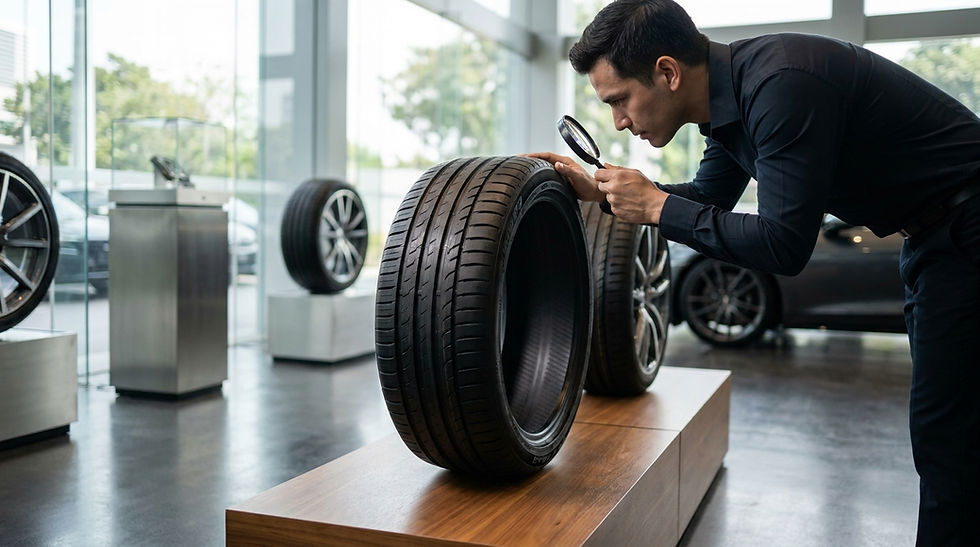
Premium tyres cost more because manufacturers invest heavily in rubber compounds, tread
design, testing, and construction. Brands such as Michelin, Bridgestone, Continental, and Goodyear offer extensive ranges built for passenger cars and newer vehicle types.
A higher price doesn't automatically mean a tyre lasts longer; it more often reflects better performance in wet braking, handling, comfort, and rolling resistance. The European Commission tyre label is a useful reference here, since it rates rolling resistance, wet grip, and external rolling noise, making it easier to compare models side by side.
Are Budget Tyres Really That Bad?
Not necessarily. A budget tyre from a reputable manufacturer can be a sensible choice for someone who mainly drives short city journeys and wants to control running costs.
The key is not to judge a tyre by price alone. Even a cheap tyre should still have the correct:
Tyre size
Load index
Speed rating
Construction
Vehicle compatibility
Singapore's road rules require tyres to be suitable for the vehicle and properly inflated, with at least 1.6 mm of tread depth across the required area for most motor vehicles. That legal minimum shouldn't be treated as the ideal replacement point; performance can drop off well before a tyre reaches it.
Safety: Where the Real Difference Shows Up
Safety is one of the biggest differences worth weighing. Premium tyres often perform strongly in wet conditions thanks to advanced tread designs and rubber compounds — a real advantage in Singapore, where heavy rain can leave roads wet within minutes.
Wet grip matters because it directly affects braking distance. The European Commission describes it as a key safety measure, since it relates to how far a vehicle travels before stopping on wet asphalt.
Budget tyres can still offer acceptable grip, but performance varies widely by model. For an EV or hybrid carrying a heavy battery system, prioritising strong wet grip over the lowest price tag is usually the smarter call.
Do Better Tyres Mean Better EV Range?
This comes down to rolling resistance. As a tyre rolls, it constantly deforms, and some of that energy is lost as heat. Tyres with lower rolling resistance need less energy to keep the vehicle moving, which is why the European Commission links rolling resistance to the distance available between refuelling or recharging.
That said, tyre choice is only one variable. Driving speed, traffic, air-conditioning use, temperature, road conditions, and driving style all affect EV energy consumption too — so upgrading to premium tyres alone won't guarantee a big jump in range.
Comfort and Road Noise

EVs run on quiet powertrains, so tyre noise becomes far more noticeable inside the cabin something Singapore drivers will notice, especially during long stretches in traffic. A tyre with a refined tread pattern and stronger construction can make a real difference here, and rolling noise is one of the metrics captured on the European tyre labelling system.
Cabin comfort still depends on more than the tyre alone, though road surface, vehicle insulation, wheel size, and suspension also play a role.
Tyre Life and Long-Term Value
A budget tyre may save money at purchase, but it isn't always the cheapest option over several years. If a cheaper tyre wears noticeably faster, you may end up replacing it sooner, eating into the initial saving.
Premium tyres can sometimes offer better wear performance, but this depends heavily on the specific model, the vehicle, wheel alignment, and driving habits. Singapore's frequent stop-start traffic adds another variable: hard acceleration, sudden braking, poor alignment, and incorrect pressure can all shorten tyre life regardless of brand. This is exactly why tyre maintenance in Singapore matters just as much as the brand you choose.
Why Tyre Pressure Matters for EVs and Hybrids
Correct tyre pressure keeps proper contact between the tyre and the road. Under-inflation increases rolling resistance and can cause faster or uneven wear, while over-inflation affects handling and ride comfort.
Always check the pressure recommended by your vehicle manufacturer, not the maximum figure printed on the tyre sidewall. Regular checks are especially worthwhile for EV owners looking to protect driving efficiency.
Choosing Tyres for Singapore's Wet Weather
Singapore's tropical climate makes wet-road performance a genuine priority, not a nice-to-have. A tyre that feels confident in dry conditions may not offer the same reassurance on a wet road.
Look for a tread design that channels water away from the contact area effectively. Good wet grip, adequate tread depth, and correct pressure all need to work together, and even the best tyre can't remove every risk from standing water or aquaplaning, so slowing down during heavy rain still matters.
Premium or Budget: Which Should You Choose?
For EV owners, premium tyres are generally worth considering if you want strong wet grip, low rolling resistance, a suitable load rating, low noise, confident handling, and reliable wear. That said, you don't need to buy the most expensive tyre on the shelf; the smarter approach is to compare tyres that meet your EV manufacturer's specifications and judge them on performance, not price. Anyone researching EV tyres in Singapore should start with the recommended tyre size and load requirements before comparing prices.
Hybrid owners have a bit more flexibility. A hybrid typically doesn't carry the same weight or torque demands as a full EV, so a good mid-range tyre can strike an excellent balance between price and performance. Focus on wet grip, comfort, fuel efficiency, tread life, and correct specifications for your vehicle. A premium tyre makes the most sense if you specifically value quieter driving or stronger handling.
Either way, a more expensive tyre isn't automatically the better choice. A driver doing mostly moderate-speed city trips may get excellent value from a quality mid-range tyre, while someone driving a heavier EV, covering frequent expressway distances, or prioritising quiet, confident wet-weather driving may get more out of a premium model. The right tyre balances safety, performance, and cost for how you actually drive.
Premium vs Budget Tyres: Quick Comparison
Feature | Premium Tyres | Budget Tyres |
Purchase price | Higher | Lower |
Wet grip | Usually stronger | Varies by model |
Rolling resistance | Often well optimised | Varies widely |
Road noise | Often lower | Can be higher |
Comfort | Usually better | Depends on model |
Tread life | Often strong | Varies |
EV suitability | Excellent options available | Some suitable options |
Long-term value | Better over years despite higher upfront cost | Lower cost, but may need more frequent replacement |
How to Choose the Right Tyres for Your Car
Check the correct tyre size.
Check the load index and speed rating.
Compare wet-road performance.
Consider rolling resistance.
Think about road noise and comfort.
Compare warranty and expected tyre life.
Choose a reputable tyre supplier and professional fitting service.
Don't pick a tyre just because another driver recommends it the best tyre for a small hybrid hatchback may not suit a heavy electric SUV.
Final Thought
Premium tyres usually have the edge in wet grip, comfort, noise control, and rolling resistance qualities that matter more for EVs given their weight, instant torque, and quiet cabins. Budget tyres remain a practical option for Singapore drivers who want to keep costs down, as long as the tyres suit the vehicle and meet the required specifications.
Rather than asking whether premium or budget tyres are always better, compare wet grip, rolling resistance, load rating, comfort, tread life, and price together. That combination not the price tag alone, is what gives you the right balance of safety, efficiency, and long-term value.
FAQs
1. Do EV tyres need a different tyre pressure from petrol cars?
Not always. The correct pressure depends on the specific vehicle, tyre size, and load. Always follow the pressure listed by the vehicle manufacturer.
2. Can I put normal car tyres on an electric vehicle?
Some EVs can use conventional passenger-car tyres, but the tyre must meet the vehicle's required load, size, and performance specifications. EV-specific tyres are another option worth comparing.
3. Does tyre brand affect an EV's battery range?
It can. Rolling resistance affects energy consumption, though driving style, speed, weather, and air-conditioning use also play a major role.
4. Are wider tyres better for hybrid or electric cars?
Not automatically. Wider tyres may change handling and grip but can also affect rolling resistance, comfort, and efficiency. Stick to sizes approved for your vehicle.
5. How often should EV and hybrid tyres be inspected?
No single interval suits every vehicle. Check tyre pressure regularly and inspect for uneven wear, cuts, cracks, bulges, and other damage. Professional inspections can help catch problems that are hard to spot at home.


Comments