When to Do a Wheel Alignment? Signs You Need It

You're driving down the PIE, hands loosely on the wheel, and you notice something odd. The car keeps drifting to the left. You correct it. It drifts again. Sound familiar? That small pull isn't your imagination, and it isn't your driving. It's most likely your wheel alignment asking for help.
Most drivers in Singapore only think about alignment after a tyre shop mentions it. By then, the tyres are often already worn unevenly, and you've spent money you didn't need to. This guide walks you through the real warning signs, in plain language, so you can catch the problem early.
What Wheel Alignment Actually Means

Wheel alignment is simply the angle at which your car's wheels meet the road. When a car leaves the factory, these angles are set precisely. Over time, and especially with daily driving, they shift out of position. This is called misalignment.
It doesn't take a big accident to cause it. A firm knock against a kerb, a pothole on a wet road, or even normal wear on suspension parts can nudge the wheels off course. Once that happens, your tyres stop meeting the road the way they should.
Why Singapore Roads Make This More Common
Singapore's roads are generally well kept, but everyday driving here still puts pressure on your wheels. Tight kerbs along HDB carparks, speed bumps in estates, and the occasional pothole near construction zones all add up. Add frequent stop-start traffic near ERP gantries, and your suspension works harder than you'd think.
The climate plays a part too. Heat and humidity soften rubber compounds slightly, which can speed up tyre wear if the alignment is already off. This is one reason workshops in Singapore that deal with car tyres in Singapore often recommend a quick alignment check alongside routine tyre rotation, rather than waiting for a visible problem.
Signs Your Car Needs a Wheel Alignment
Some signs are obvious. Others are easy to miss until they become expensive. Watch out for these:
The car pulls or drifts to one side, even on a flat, straight road
The steering wheel feels off-centre when driving straight
You notice steering wheel vibration at normal speeds
Tyres wear unevenly, with one edge balder than the other
The steering feels loose, heavy, or slow to respond
You hear a squealing sound from the tyres on turns
If even one of these sounds familiar, it's worth booking a check. Left alone, these issues don't fix themselves. They tend to get worse the longer you drive.
What Happens During a Wheel Alignment Check
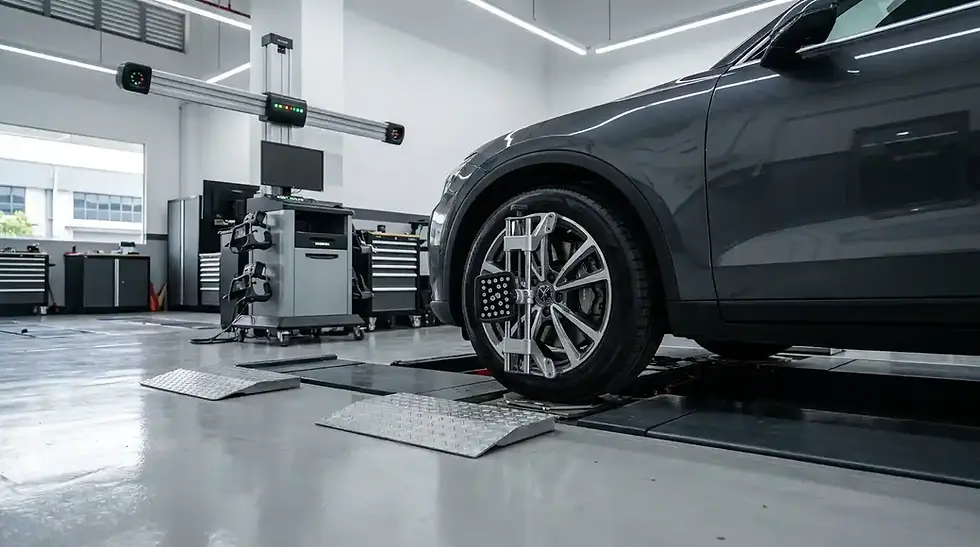
A technician places your car on an alignment machine that measures three angles: camber, caster, and toe. These sound technical, but the idea is simple. Camber is the wheel's tilt when viewed from the front. Caster affects steering stability. Toe is whether the wheels point slightly inward or outward compared to each other.
The machine compares your car's current angles against the manufacturer's specification. The technician then adjusts the suspension components until everything sits back within range. The whole process usually takes under an hour for most cars.
How Often Should You Align Your Wheels in Singapore
There's no single rule that fits every car, but a sensible habit is to get it checked every 10,000 to 15,000 kilometres, or roughly once a year for the average driver. It's also worth checking after any of these events:
You've hit a deep pothole or kerb hard
You've had new tyres fitted
Your car has had suspension repair work
You notice any of the warning signs mentioned earlier
Many workshops bundle an alignment check with your regular servicing, so it doesn't need to be a separate trip.
The Cost of Ignoring Wheel Alignment
Poor alignment doesn't just feel annoying. It quietly costs you money. Uneven tyre wear means you'll replace tyres sooner than expected, sometimes years before their proper lifespan is up. Fuel efficiency also drops slightly because misaligned wheels create extra rolling resistance, forcing the engine to work harder.
There's a safety angle too. A car pulling to one side reduces your control, particularly in wet weather or during sudden braking. According to the Land Transport Authority, roadworthy vehicle checks in Singapore already closely inspect tyre condition and steering response, both of which are directly affected by alignment. Keeping your wheel alignment cost in Singapore budget small and regular is far cheaper than a full tyre replacement bill later.
Final Thought
A drifting car, a slightly off-centre steering wheel, or tyres wearing faster on one side are all small clues pointing to the same issue: your wheel alignment needs attention. It's a quiet problem that builds up gradually, but it's also one of the easiest and cheapest things to fix early. Get it checked once a year, after any hard knock on the road, or the moment something feels slightly wrong, and your car will reward you with smoother drives, longer-lasting tyres, and a lighter workshop bill.
FAQs
1. Can wheel alignment affect how my car handles during heavy rain?
Yes. Misaligned wheels reduce grip and make steering less predictable, which matters more on slippery roads.
2. Does wheel alignment affect my car's fuel consumption?
It can. Wheels that aren't sitting correctly create more resistance against the road, so the engine burns slightly more fuel to keep the same speed.
3. Is wheel alignment covered under a car warranty in Singapore?
This depends on the manufacturer and warranty terms, so check directly with your dealership before assuming it's included.
4. Can I still drive my car if the alignment is slightly off?
You can, but it isn't ideal. Minor misalignment gets worse with continued driving and speeds up tyre damage.
5. Does a wheel balancing service replace the need for alignment?
No. Balancing and alignment solve different problems, and a car can need one without needing the other.


Comments